Utthita Trikonasana – extended three angle pose.
Think rotation, think strengthening.
Think stretching, think opening.
Deeply grounded, while reaching up towards the ceiling.
 🔱 🔱
🔱 🔱
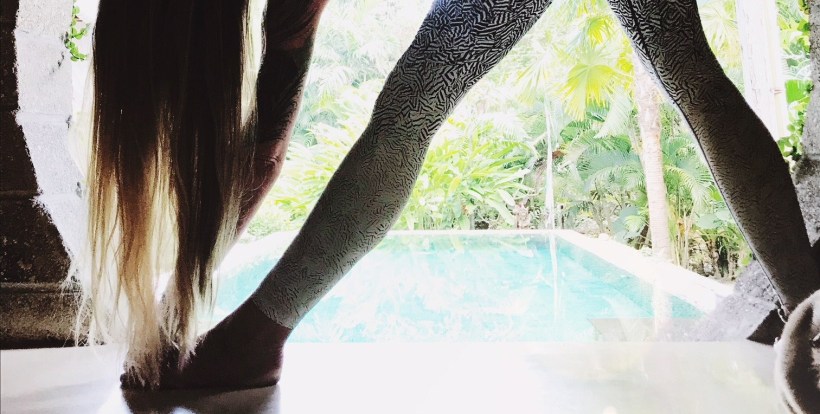
Utthita Trikonasana – extended three angle pose.
Think rotation, think strengthening.
Think stretching, think opening.
Deeply grounded, while reaching up towards the ceiling.
🔱 🔱
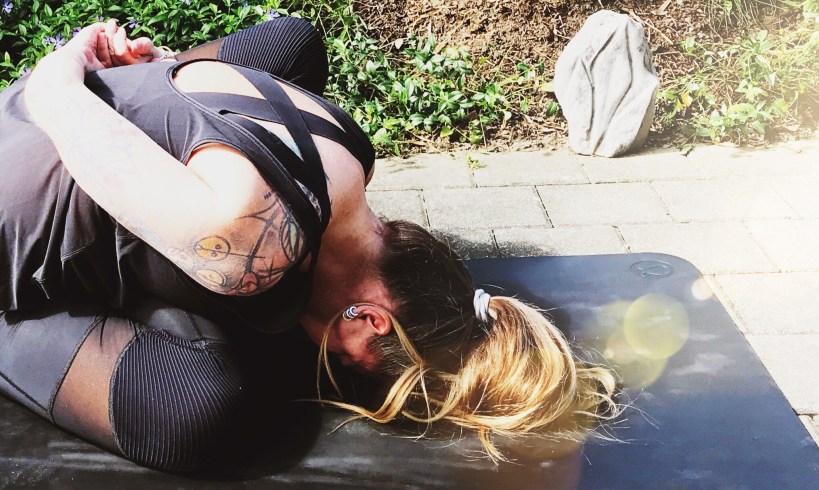
Did you know, it’s named after the sage, Marichi, which means “ray of light” – isn’t it beautiful?
It is said to stimulate and calm the brain, while stretching the spine and shoulders. As one leg is placed in half lotus, it stimulates the colon and massages the abdominal organs, such as the liver and kidneys. Marichyasana B is associated with the manipura chakra and such a great posture for taking the attention and focus inwards.
These are the facts, however, for me it’s a pose to release. There are many different things to feel, a deep stretch here, a bit of pressure there, and I can feel my body slowly accepting and releasing. I’m facing steadiness and ease like in no other posture. Rather easy, but same time complex due to the combination of half lotus and binding.
Honestly, the only asana I breathe extra slow and sometimes I find myself counting and counting…. oh 5, yeah, it was 5 breath…. 🙂
I wrote this post some time ago and thought about it today. It’s my birthday in a couple of days and my practice this morning didn’t made me feel my age, which was just fantastic! I know, it’s different each time and I don’t take it for granted. But a good reason to repost the below!
Discover the magic
Unplug from the ordinary and discover the extraordinary. Free yourself from the idea of age. Yes, agree, that’s quite a difficult one and I’m struggling myself. Yoga teaches me to believe in myself. As long as you love what you do, don’t care about anything.
There’s just one thing you should be aware of when you passed your 20s and 30s and 40s and are not already a super-duper yoga pro, doing handstand on your index finger: Stop comparing yourself to the 20 years old girl next to you.
It’s not about ‚she can do and you can’t‘. Not about her perfect body and your body showing a tiny little bit the fun you had in life so far (yes, you read it, bloody amazing experiences, I know!).
Our whole body simply works different at certain ages. Our body change and sometimes we might recognize this as something negative. But it’s not. It’s just different. We might get less stable and scarier than we were 10 years ago. Even if you work hard, there are no guaranteed results. Life doesn’t work that way.
Try changing your perspective to one of gratitude over what you can do, right now. Try changing your expectations. It’s not about that fancy posture, it’s about your inner connection and peace. You’ll progress anyway!
The beauty of age is to not care anymore and just do what you want. Becoming a yoga teacher in your 50s? Go for it! Worrying that you can’t do it same way as all the youngsters? True, you won’t. You’ll do it differently and your students will appreciate your approach. Just trust in yourself and do whatever you love. There’s no better guidance as love and passion. Accept who you are. Where you are. Live your dreams, without struggling with thoughts of right and wrong. You are never too old for anything.
Be driven by love. End of story.
༺♡༻
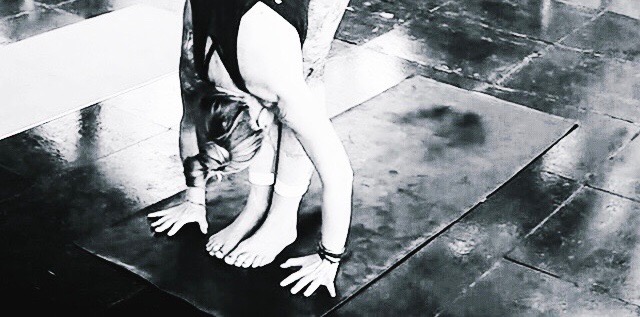
Are you a forward folder or a back bender? I once heard that we tend to be either one or the other, well if not made of rubber of course. I have to admit, it’s very true for me. I’m a forward folder and I love it. My back is rather rounded and stiff, it’s difficult for me to go backwards. Physically spoken! As going backwards in any other meaning than physically isn’t just difficult, but a no go for me. I only know one direction, forward. Haha, yes, there it is, must be a connection. Well I leave it with this, even if my mind is just telling me stories about optional deep psychological interpretations… not now, not here!
I’d like to tell you about forward folds and hamstrings. I’m talking about a group of muscles placed on the backside of our thighs. I have an intense relationship with my beauties, a daily conversation, as they are kind of shilly-shally, everyday in a different mood. Some days very open and soft, which makes all forward folds such a pleasure, other days stiff, hard and full of tension.
„To breathe into and release the hamstrings can be very upsetting. We store many powerful emotions, such as suppressed anger, competitiveness, and fear of inadequacy, in our hamstring muscles. All suppressed emotions are potentially crippling to our health: they are toxic and have an impact on our personality…“
(Ashtanga Yoga, Practice & Philosophy, by Gregor Maehle)
Here you go, one reason! Another reason is that we spend too much time sitting, which shortens our hamstrings. Changing habits helps of course, as well as regular practice.
When working on your hamstrings it’s not just about stretching. We need both, lengthen and strengthen them. Always be careful, listen to them, treat them thoughtful and respect whatever they present you with that moment. Send your breath into the hamstrings and actively let all tension go with each exhale. Instead of forcing, go with the yin approach and get soft together with your hamstrings. Allow them to open in their own time and appreciate all they do for you!
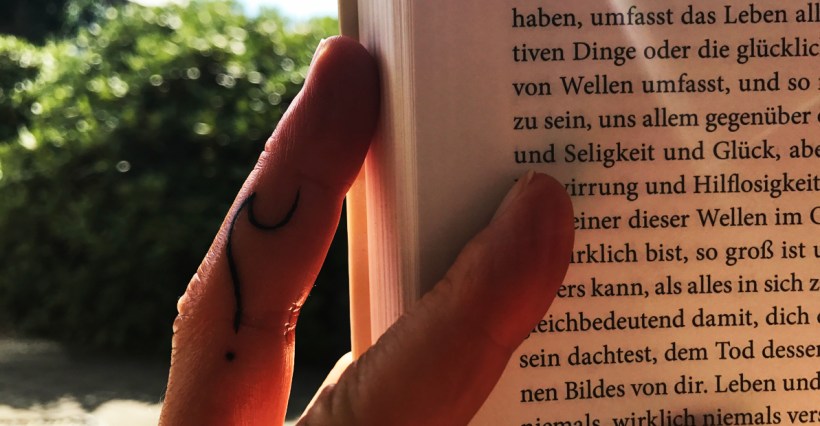
The most challenging practice is to pause. Terrible pain in my ribs released a huge moaning out of my mouth and made me fall on my face in chaturanga. Damn. Not again. I can’t practice asanas since two weeks and I’m close to freak out. I know, not very yogic. I miss my Ashtanga practice badly! At least some yin yoga postures are manageable and do the daily work to calm me down.
What do I have to learn? Patience. Trust. Let go. Looks like I’m getting this lesson once in a while the hard way. But hey, I take the challenge, I’m working on it. I meditate, sending my breath through all my cells. The good thing about it, I use the time to bring all my attention to the yoga off the mat. Read here what else yoga has to offer. There’s a lot to learn and to do and I have to admit, it’s time to invest a bit more time here!
And for the time being, getting up, is my ultimate yoga practice.

I didn’t manage to sleep last night and when the alarm told me to get up this morning, everything in me shouted loud and clear “NO!” Tuesday morning means an extra early start as I teach an early bird class. So no excuses. Luckily, traffic had mercy on me and I arrived early. It was still dark outside, candles were burning next to my mat and I sat in meditation. So grateful for this peaceful time, just to connect with myself, get settled and ready for class. I was waiting for my students, not expecting many to show up, as I had a few cancellations. This time of the year, people tend to be over busy, often driven by a do-more and be-more attitude, easily forgetting to take a moment to stop and breathe or an hour to practice asanas, getting some quiet and quality time next to the daily craziness….. However, I was surprised that finally just one student showed up.
Instead of being disappointed, I decided to embrace the situation and even felt blessed when my student agreed to practice together – what else works better than a nice Ashtanga practice to move in synchronicity! Even if time was limited, I enjoyed our beautiful flow through the vinyasas a lot. I’m so grateful for this unexpected opportunity!
Early morning practice and particularly getting myself upside down into a headstand always brings my world back to peace. What a shift into a most beautiful start into the day! Thanks for your flexibility B., it was a pleasure practicing with you!
Yogis!
I’m working on the Yin classes for our retreat next year — and I’m happy to give a hint on what to expect:
Next to the Ashtanga or Vinyasa classes in the morning, we will practice Yin Yoga in the evenings, which means we will go into the postures and hold them for several minutes. Our focus will be on our breath while we will strengthen the mobility of the joints and stretch the deeper muscles, the connective tissues and fascia. The meridian systems will be stimulated and inner organs massaged.
Each class will focus on one of the five elements — wood, fire, earth, metal and water. We will learn about the relating organs as well as the assigned emotions. No worries, we won’t go to much into the theory, but experience it!
Each class will have an introducing meditation and/or breathing sequence to prepare us for the calming, but intense practice.
I’m so looking forward to seeing you there! Get the details here and contact me for any questions!
Do you feel it too? Summer is gone in Europe and my body speaks loud to me, telling me to slow down, be mindful while adjusting to the changes. Well, getting more receptive to what’s going on around might be also a matter of age, what can I say? It’s hard staying young 😉
During this period of time, I feel my joints cracking, as if they ask to be lubrified. My hamstrings behave like the strings of a guitar with too much tension.
So, what to do? Embrace your body and its awesome capabilities! Accept where you are in this moment and adjust your practice. This is what I did this morning:
I turned on music. Yes, I’m practicing Ashtanga, so what! My favorite music made it easier to release and just flow. I have to admit, between Utthita Hasta Padangusthasana and Ardha baddha padmottanasana I lost my focus and started dancing. I had a huge smile on my face, it all felt so right. It was ok. It’s MY practice. And my body found its rhythm, tuned in, opened and turned into its softness. It’s all about steadiness and ease isn’t it? So don’t be so hard on yourself and remember the second part, „ease“. Finding ease in our steadiness is the moment we start doing yoga.
All you need to do is listen to your body. Be aware and only do good to you. Hehe, this doesn’t mean shavasana only, well it might…. It’s your practice! Even being an Ashtangi might mean yin yoga for one day. If it feels right, it is right. Just show up, adjust your practice and get your blood flowing. And please, always keep a good sense of humor!
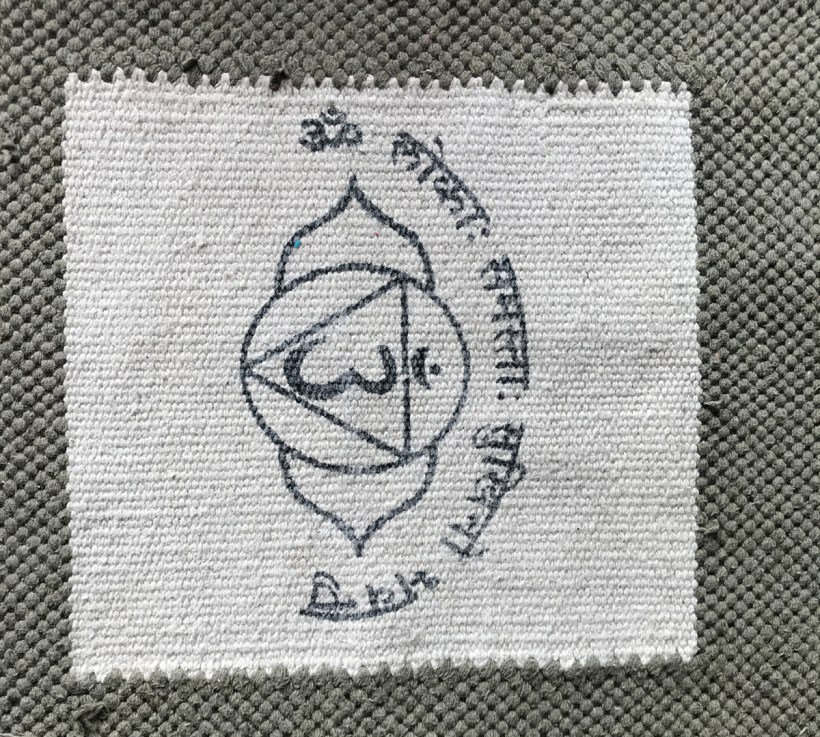
We had such a beautiful practice this morning! It was the Primary Series, together with my soul sister and it was literally this: soul related. We chanted the opening prayer together and from there just flowing through the asanas in perfect harmony. Our breath synchronized, like the asanas, even the vinyasas seamed to be twins. In the Ashtanga practice we say each breath initiates a movement. This was exactly the case, but it was doubled. Each of us in her own bubble, while both of us together, we were riding the waves of our breath, translated them into movement, whilst dancing a beautiful synchronicity.
This very peaceful and touching practice did not end with the closing. It was my companion throughout the day and I still feel it.
Give it a try yogis if you not already have, it’s such a stunning and touching energy! A led Ashtanga class is of course supposed to deliver exactly this, as everyone is following the teachers counts and should do exactly the same, same time, including breathing.
However, I never experienced this effect of synchronicity better than practicing with a close friend. Thanks soulsis for making my day!
Ups. What? Ashtanga yoga and Yin yoga are the same.
Let this melt in your mouth, and even more, swallow it. Don’t reply darling, read first:
What we do in Yin yoga: we hold a posture, we connect, we tune in, we feel what we’re doing. We breathe intense, we relax. We meditate.
What we do in Ashtanga, a Yang yoga practice: the same. Really? Well, we don’t relax, but it’s about finding ease. We make our practice a meditation. Yes, when practicing Ashtanga, we move a lot, we sweat. And best case we find ourselves in a moving meditation.
If you look at the Yin/Yang symbol, you can see there’s a black dot in the white and a white dot in the black. There’s always both, there’s a little Yin in every Yang, there’s a little Yang in every Yin. It’s all about balance. Obviously not just in yoga, it’s everywhere, literally.
So, where exactly is the Yin in Ashtanga? Think about it. It might be different for you, but for me it’s this: when holding a posture for 5 counts (or more in the closing sequence). We connect, we aim for stillness, we are in deep ujjay breath, looking for steadiness as well as ease. That’s Yin! Even if we don’t relax, we get kind of soft in all our stability. We don’t close our eyes like we do in Yin yoga, but we practice drishti. A focus point that supports us to go internal. We tune in, we feel our body, we feel what we’re doing. Same as we do in Yin, right.
I like the idea of balancing. Doing some Yin to balance my Ashtanga practice, but also being aware of where there’s Yang in my Yin practice and of course the other way around, where I find Yin in Ashtanga.
Same objectives, same tools. Just such a different implementation!
 TUNEin:YOGA