10 tips to deal with the festive season yogi-style

Forget about any end of the year stress and find peace of mind during the holidays with these techniques:

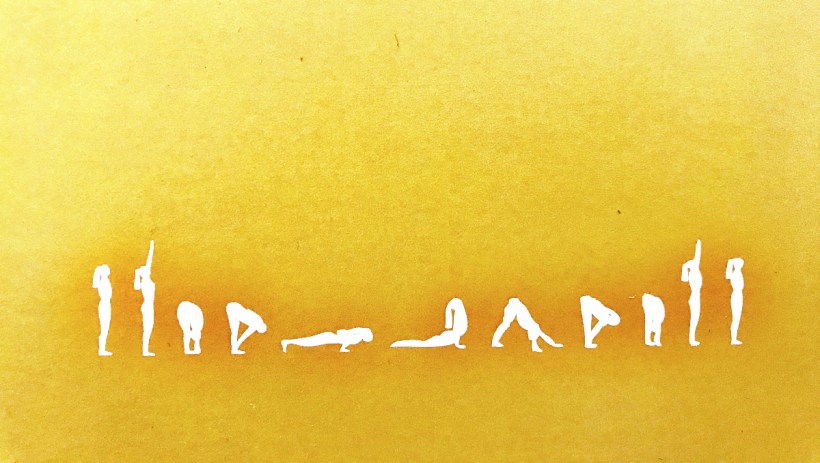
  1. Keep on practicing. No time to take a class? No worries, practice at home. Turn your favorite music on, it might be slow and calming or fancy and rhythmic – whatever your practice asks for is right. Start with some warm up, a couple of sun salutations and just continue flowing, allow your body to guide you. If this doesn’t work for you, youtube has loads of classes!
  2. Don’t care about time. Got 15 min? Practice. Got 60 minutes? Practice. All that counts is to show up and move your ass.
  3. Meditate. Right after waking up, before sleeping or any time in between. Same here, time doesn’t matter that much, even just 5 min a day will have an impact. Too much noise around? Go out, do a walking meditation!
  4. Practice yoga off the mat: stay present. What ever you do, do just that. Be fully there.
  5. Don’t listen just to answer. When you listen, hear and understand what someone wants to share with you, it’s not about you.
  6. Breathe. Lengthen your breath into your belly, extend your exhales. The easiest you can do to nourish yourself, calm down and refocus.
  7. Be grateful for all that is now. Literally everything. All the beauty, everything that is perfect and also the rather difficult and complex things. Everything has a reason, so just embrace it!
  8. Stop judging. Oh yeah, particularly during stressful times we tend to be less tolerant. But finally, this doesn’t help at all. The moment you recognize you’re about to judge, take a deep breathe, let it go, smile.
  9. Enjoy everything you do! Accept an appreciate your decisions. No matter if you’re attending a class, baking cookies or taking a nap, enjoy it.
  10. Repeat and surrender to the magic!
Experience the gap

December calls us to connection. To generosity. To lighting lights in the darkness. To moon bathing. Get your crystals out to clean and recharge during Sundays’ full moon!

Let’s take time to slow down, time to connect and breathe. As you gently breathe in and out, notice the space in between. The space between your inhales and exhales, your exhales and inhales. That space between your breath is neither in or out, there’s no activity. It is the present moment, it is your still point. The present moment is this moment, where time doesn’t exist. There’s no past, no future, now is all that is.

Don’t do anything but breathe and observe. Get used to it. Experience the present moment. Being, instead of doing.

This too is yoga.

Embrace the unexpected

I didn’t manage to sleep last night and when the alarm told me to get up this morning, everything in me shouted loud and clear “NO!” Tuesday morning means an extra early start as I teach an early bird class. So no excuses. Luckily, traffic had mercy on me and I arrived early. It was still dark outside, candles were burning next to my mat and I sat in meditation. So grateful for this peaceful time, just to connect with myself, get settled and ready for class. I was waiting for my students, not expecting many to show up, as I had a few cancellations. This time of the year, people tend to be over busy, often driven by a do-more and be-more attitude, easily forgetting to take a moment to stop and breathe or an hour to practice asanas, getting some quiet and quality time next to the daily craziness….. However, I was surprised that finally just one student showed up.

Instead of being disappointed, I decided to embrace the situation and even felt blessed when my student agreed to practice together – what else works better than a nice Ashtanga practice to move in synchronicity! Even if time was limited, I enjoyed our beautiful flow through the vinyasas a lot. I’m so grateful for this unexpected opportunity!

Early morning practice and particularly getting myself upside down into a headstand always brings my world back to peace. What a shift into a most beautiful start into the day! Thanks for your flexibility B., it was a pleasure practicing with you!

Cultivate a practice of gratitude

Particularly during these days, close to the end of the year, we hear a lot about being grateful. However, gratitude is a great tool of mindfulness-based practices and helps creating a more positive mindset.

Why you should establish a daily practice — let me start with Deepak Chopra and what he said:

“Gratitude is good for you; it creates a biochemical shift in the body. The brain responds to positive input and sends life-enhancing messages to every cell.”

Sounds good? Yeah, and there’s more. When practicing gratitude, you will attract more reasons to be grateful for. This is the law of attraction! Meaning you’re not just grateful for what you already have, but also for what you want to have. Practice gratitude to receive. Woop woop, good trick, isn’t it? And it works! Just imagine, visualize what you wish as if you already received it. This way you’re sending the right energy out and the universe will deliver. Additionally, you are reprogramming yourself — in a state of deep gratitude, you will feel soft, released and happy.

How does a practice like this look like? Well, gratitude comes in many forms and there’s no right and wrong how to do it. Go with what feels good to you, but if you like to have some inspiration, here you go:

  • Use gratitude as an intention you set at the beginning of a yoga class (it can relate to your yoga practice, but doesn’t has to).
  • Say mentally a little prayer at the end of your yoga practice (you might want to thank your body for the great work and don’t forget to thank yourself for making time for your practice).
  • When life is going well, remember to be grateful for what you have. Whenever you recognize it, whisper a ‚thank you‘.
  • When life is serving lemons — be grateful for the teaching, there’s a reason for it. Give thanks for the teaching as well as for the final state you want to reach, as if you’re already there and looking back.
  • While it always works to send spontaneous ‚thanks‘ into the space, create a daily ritual, repetition is key.

I do it every morning, first thing when I wake up. I can recommend particularly this time, as the day is brand new, our brain still in a rest mood. Good to plant a seed. I give my thanks to the universe — couple of things I have and also a couple of things I don’t have so far. A great start into the day!

Gratitude is a practice of creating a state of emotional prosperity — go for it, make it a habit.

Creating

Yogis!

I’m working on the Yin classes for our retreat next year — and I’m happy to give a hint on what to expect:

Next to the Ashtanga or Vinyasa classes in the morning, we will practice Yin Yoga in the evenings, which means we will go into the postures and hold them for several minutes. Our focus will be on our breath while we will strengthen the mobility of the joints and stretch the deeper muscles, the connective tissues and fascia. The meridian systems will be stimulated and inner organs massaged.

Each class will focus on one of the five elements — wood, fire, earth, metal and water. We will learn about the relating organs as well as the assigned emotions. No worries, we won’t go to much into the theory, but experience it!

Each class will have an introducing meditation and/or breathing sequence to prepare us for the calming, but intense practice.

I’m so looking forward to seeing you there! Get the details here and contact me for any questions!

Practice mindful

 „If you practice yoga to get better at practicing asana, you will quit.“

Of course we all want to get better and master certain postures. But Yogis, this happens automatically, you just need to show up, practice and do your best. Yoga is much more – I had a quite good teaching today.

I woke up this morning with a terrible headache. I could hardly get up and as it’s weekend, I allowed myself to stay a bit longer in bed. I had my lemon water, but the stabbing pain was still there. I practiced with the hope it might help. It was tough, not just due to the pain, but my full body was stiff and constantly asking for Shavasana.

All of a sudden I recognized that I mixed up the sequence, wrong order of what I’m used to practice each day. I stopped, that was crazy. And I had to laugh, I was distracted by thoughts and forgot where I was in the sequence. The more I practice mindfulness, the more I recognize what it means NOT to be in the present moment. I clearly wasn’t when I practiced and this affected my flow. Nothing major of course, but it made clear how easily it could lead to injuries when allowing the mind to wander.

I continued my practice with a better focus and my medicine was close – no, not Shavsana, but headstand. My bad headache was much better after turning upside down.

My practice today teached me about the importance of mindfulness. Practicing asanas was nothing but the means to an end. What happened today to me on the mat is happening off the mat exactly the same. Think about it. How often are your thoughts wandering and you’re not paying attention? Particularly when doing things you are used to, things that reached a state of routine or even automatism?

Commit to what you’re doing, fully and mindfully. And take your learnings from the mat off the mat.

Meditation is Mindfulness is Yoga is Meditation

Mindfulness is not just a hype everyone is talking about at the moment, in these times it’s the key to stay sane. But what is mindfulness? Mindfulness means being in the present moment, in the here and now, without any judgment. The past is gone, nothing we can do about it. The future is not yet there, so why waisting our time with being rather in the past or in the future? We miss all we have, the present moment.

I’m working quite intense on this since some time and during a yoga class I taught recently, I recognized how easy it is for me to be fully in the present moment when I teach. I’m focused and concentrated, no thoughts that don’t belong to exactly what I’m doing. Why is it so easy in this situation and difficult in others? Is there any magic formula to be mindful? Nope. But passion is a good trigger to keep us exactly where we should be, in the here and now.

Luckily there are different techniques that help us learning how to stop the ‘autopilot-mode’ and focus on the current moment. Meditation is one of them. I wrote already a lot about it and my struggles (https://tuneinyoga.com/2016/07/16/meditation-vs-meditation/), but I didn’t gave up, I so much wanted to sit cross legged in stillness. I was looking for this quietness in my head, this emptiness, that I already found when practicing asanas. And I finally found it. In my daily meditation practice, I understood how my thoughts appear in my head and where. Just through moving them mentally to a different place, I can get rid of them. My god, so easy and it took my ages to find out! Well, this is my way and it might not be yours, but I cant tell you, it’s so worth to find out!

The more and the longer I practice meditation, the easier it get’s for me to stop the craziness of jumping between not existing time zones. The present moment is all that counts, all that matters, all that exists.

Give it a try! If you are in the Zurich area, stay tuned, learn how to create calm in your every day life and we will do it all together — soon to come: TUNEin:CALM 🙂

Let the games begin!

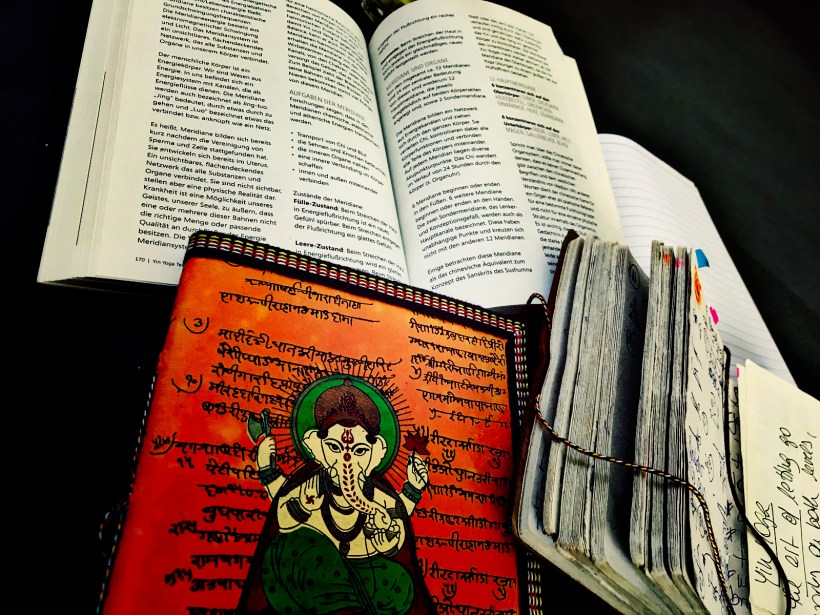
Woop woop – the work started! Just creating the first Yin Yoga sequence for my Yoga Retreat next year. A new book with blank pages is waiting to be filled…. We will practice Yin, Pranayama and Meditation each evening to relax and unwind as well as soothe our soul. We will float into the evenings with a huge smile on our faces 🙂

Progress

Never underestimate your progress! Sometimes we can’t see it, but feel it. Sometimes it’s rather going backwards and the progress isn’t in the body, but in the mind.

Are there postures you wish you could do, are you trying again and again, but mostly not very successful? Well, if you really want to master a posture, it means daily practice. This is what I did with headstand. It took me one year. Each day I practiced what I could and one day, boom! I was up. And headstand became my absolute favorite posture, I’m just in love.

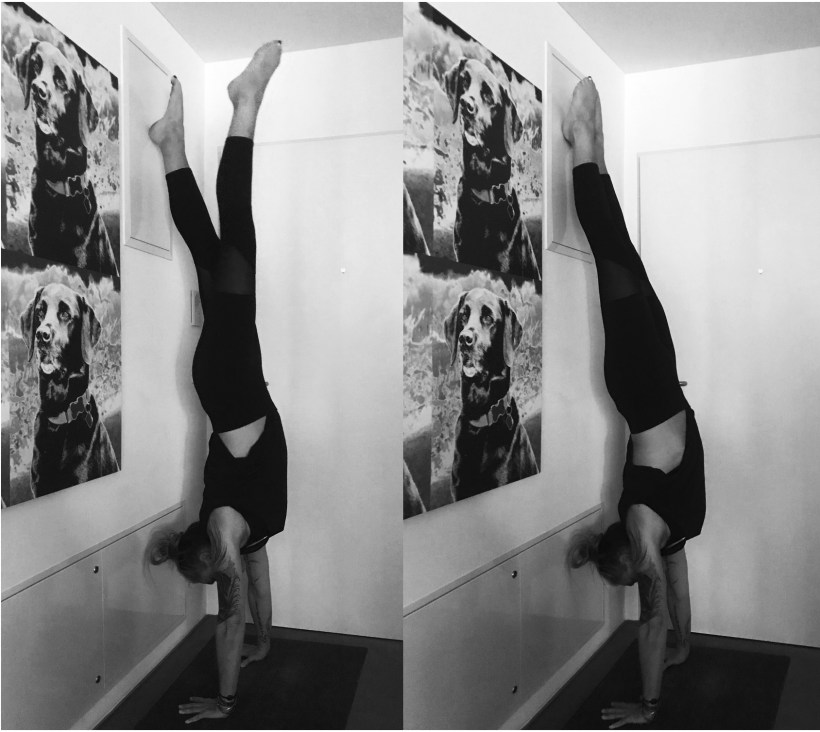
Now handstand moved into my focus. I know, it’s quite easy for some people, unfortunately not for me. I couldn’t even imagine me balancing on my hands ever, but there’s light at the end of the tunnel. I started walking up the wall, which showed me, that I’ve got enough strength. That’s what I did for some time, to get used to it and feel my body in this position better. But the problem isn’t my body, it’s in my head and it’s called fear. A beast not easy to handle. I took the challenge. Within one week, I managed to touch the opposite wall. Yeah. Now I can really feel the posture and what needs to be done. I feel how my body lengthens, I feel the difference when pointing my feet, when engaging the bandhas, when pushing into my hands. And I know, I will make it.

But finally, mastering a posture is just a side effect. The real progress is recognizing what happens in our body when working on a certain posture. Being aware of the effects when engaging, activating etc. It’s amazing. Also what needs to be done mentally to overcome fear. This is so important, not just on the mat, as you will take your experiences with you, whatever you do.

I’m working on my body, I’m working on my mind, I’m changing and I love it. I’m showing age my middle finger, I’m still learning and won’t stop. Progress in baby steps can be even more beneficial as just doing a huge jump.

Yogi, never underestimate what you’re doing!

Don’t skip Shavasana

There are usually two kinds of yogis: those who love Shavasana and those who skip it if any possible. Yogis, please don’t skip – and I know what I’m talking about, as I rather belong to the second group, particularly when practicing by myself at home.

Let me tell you a bit more about this final posture. Shavasana can be translated as corps pose. It’s said that Shavasana is a process of rebirth! How beautiful is that? Honestly, think about it! You are reborn after each practice…. Just this should already convince you to never skip again. But hey, there’s much more:

In Shavasana we are getting our bodies quite after practice, it’s the time to rest and release, to slip into a blissful neutrality and stillness. It’s also said that we need this time to get the practice and all learnings settled in and assimilate. Shavasana gives the nervous system a chance to integrate all the new neuromuscular information generated in the asana practice and prepares you to deal with daily life once again. So don’t underestimate the effect of this final posture.

While it looks easy, it might not be. It’s not a time to sleep and it takes practice and patience to surrender easily. It can be a challenge for the mind to get out of this “wasting of time” mode. Even if your body weaves easily into a relaxing state, allow your mind to follow. Send your thoughts away, just let them pass by. Stop moving, stop judging. Face the stillness and your own inner fear, which unconsciously rules many of your actions. Immerse into the friendly darkness and just be there, observe.

Yogis, allow Shavasana to do its work – to rejuvenate your body, mind, and spirit!